Cervical Spine & Neck Surgery
The neck sits closer to the spinal cord and brainstem than any other part of the spine, which makes cervical surgery inherently higher stakes. Dr. Vignesh Pushparaj brings fellowship trained orthopedic spine expertise together with strong neuro-anatomical and neuromonitoring grounding, so complex neck cases are approached with clarity rather than hesitation.
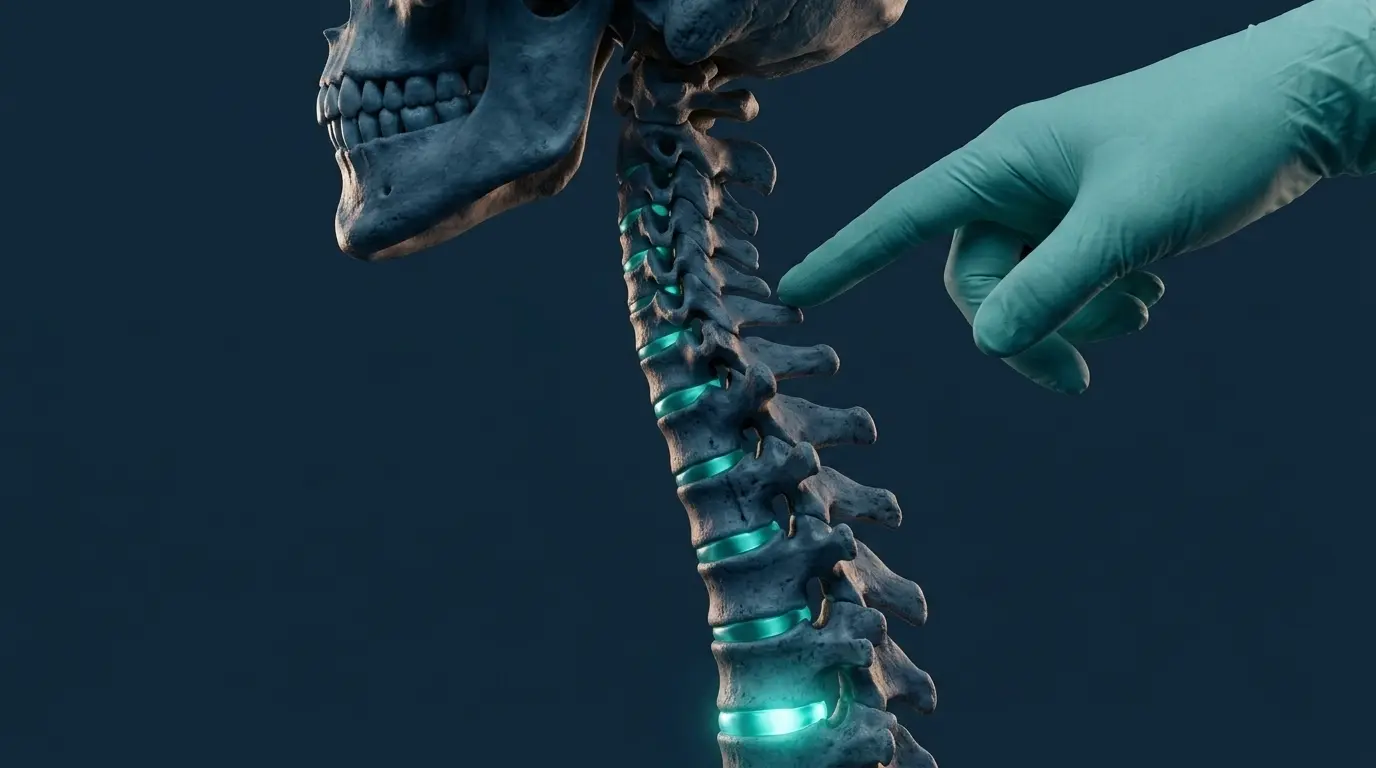
The cervical spine protects the spinal cord at its most vulnerable point and sits close to the vertebral arteries and brainstem. A problem here can affect not just pain or movement, but hand function, balance and, in advanced cases, walking itself. This is why cervical cases are often referred onward rather than treated in a general orthopedic setting.
Dr. Vignesh Pushparaj combines his orthopedic spine fellowship training (AO Spine Asia, the Netherlands and Michigan) with a strong grounding in neuro-anatomy and intraoperative neuromonitoring. This combination is what allows complex neck cases to be assessed and managed with a genuinely higher margin of safety, and it is why positive outcomes in these cases can increase meaningfully when the surgeon's training matches the anatomy involved.
A detailed neurological exam alongside review of prior imaging and records, before the first appointment is complete.
MRI, CT and dynamic flexion-extension X-rays to map exactly how the spinal cord and nerve roots are affected.
Higher risk cases are reviewed with neuromonitoring specialists and anaesthesia colleagues ahead of any decision.
A clear conversation on what surgery can realistically achieve, given the added stakes of operating near the cord.
Intraoperative SSEP and MEP monitoring throughout, followed by structured, closely tracked recovery.
Arm pain, numbness or weakness caused by a disc pressing on a cervical nerve root.
Slow, progressive spinal cord compression that shows up first as clumsy hands or an unsteady walk.
Kyphosis or malalignment of the neck, often after prior surgery or long-standing degeneration.
High-energy and osteoporotic fractures of the neck, assessed and stabilised on an urgent basis.
Rare anomalies at the base of the skull and top of the spine, requiring highly specific surgical planning.
Primary and metastatic tumours, along with infections of the cervical spine, managed with urgency.
"Neck surgery is too risky, so it's safer to just leave it alone."
With continuous intraoperative neuromonitoring and a surgeon trained specifically for cervical anatomy, the actual risk is often far lower than patients assume. Leaving true cord compression untreated carries its own serious risk.
"Clumsy hands and an unsteady walk are just signs of getting older."
These can be early signs of cervical myelopathy, a form of spinal cord compression. It rarely improves on its own and is worth a proper evaluation rather than being dismissed as ageing.
"Neck surgery always means a big scar and months off work."
Many cervical procedures today use small incisions, and with structured recovery, patients are often back to normal activity in weeks, not months.
"Getting a second opinion means my first doctor made a mistake."
Cervical cases are complex enough that a specialist second opinion is simply good practice. It is about matching the case to the right expertise, not about anyone being wrong.
Watch
Dr. Vignesh Pushparaj on why the neck needs focused attention, and how cervical myelopathy is assessed and treated.
Dr. Vignesh Pushparaj receives referrals from across Tamil Nadu and beyond. If you are a physician with a complex cervical case, or a patient seeking a second opinion, contact us directly.