Complex Spine Cases
Fellowship-trained expertise for revision surgeries, rare spine conditions, tumours, infections, and multi-level deformities - cases that require specialist-level judgment at every step.
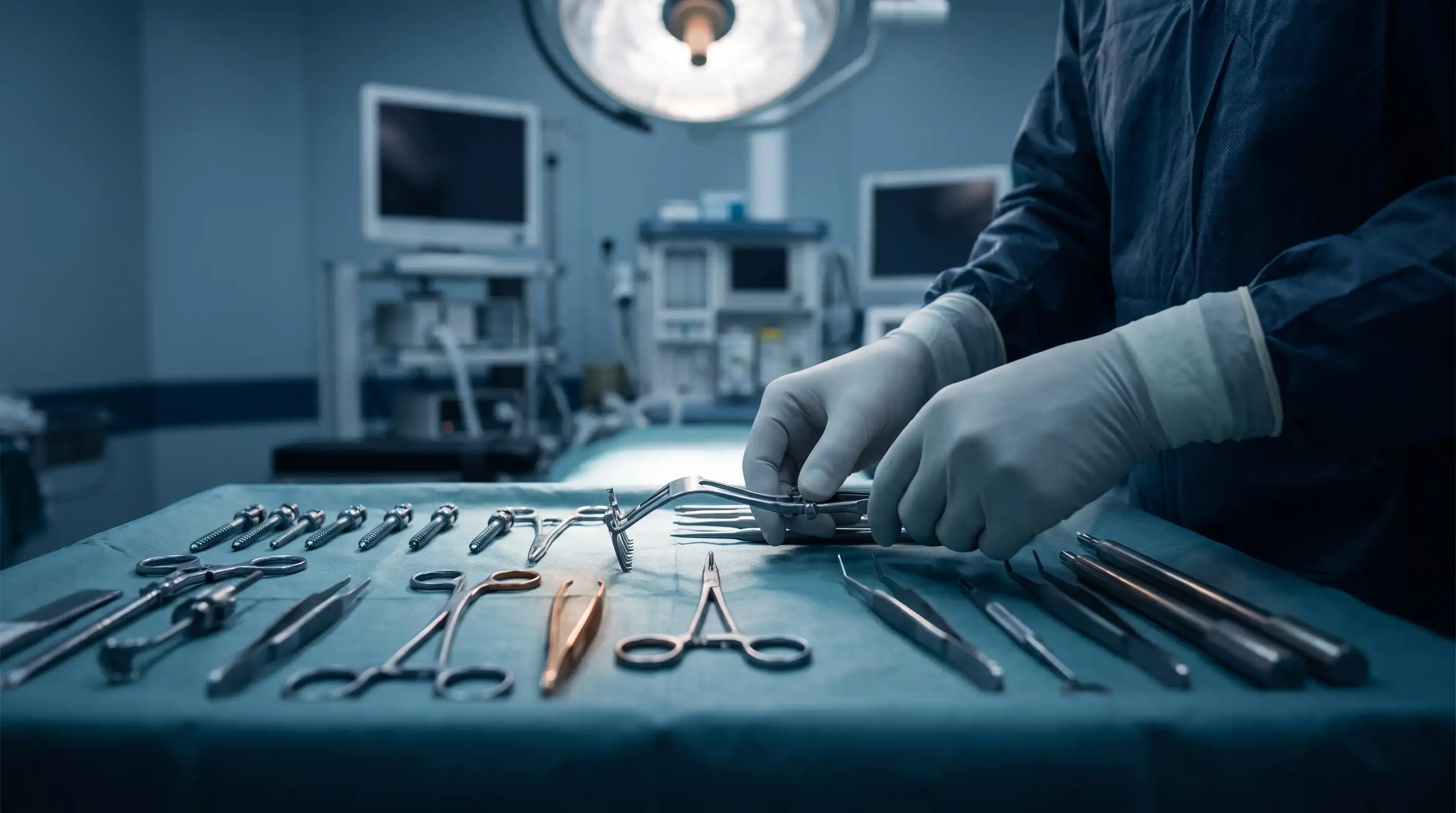
Complex spine cases involve anatomical distortion, prior failed surgeries, rare pathologies, or multi-level disease where standard protocols break down. These cases demand a surgeon who has specifically trained for them - not one who occasionally encounters them.
Dr. Vignesh Pushparaj has built his practice around exactly these patients: those told "nothing more can be done," those with incomplete diagnoses, and those facing a second or third surgery. His fellowship training across AO Spine Asia, the Netherlands, and Michigan gave him exposure to hundreds of such cases under world-class mentorship.
All prior imaging, surgical notes, and records are reviewed before the first appointment.
3D CT reconstruction, dynamic MRI, standing full-spine X-rays, and neurophysiology where indicated.
Tumours, infections, or combined pathologies are reviewed with oncologists, ID specialists, and pain physicians.
We discuss what surgery can achieve versus what it cannot, so decisions are made with full information.
Minimally invasive or open reconstruction, with structured physiotherapy and long-term follow-up.
Persistent or recurrent pain after technically successful surgery - from adjacent segment disease, scar tissue, or hardware failure.
TB spondylitis, pyogenic discitis, and epidural abscess can cause irreversible paralysis if untreated.
Primary bone tumours and metastatic disease, with goals ranging from cure to stabilisation and pain control.
Ossification of the posterior longitudinal ligament causes progressive myelopathy and is frequently missed.
High-energy trauma, osteoporotic, and pathological fractures each need a different fixation approach.
Loose or broken screws, non-union, adjacent segment breakdown, and flatback deformity after prior fusion.
"My previous surgeon said nothing can be done."
"Nothing more I can do" often means "nothing more within my scope." A specialist in complex spine may have entirely different options available.
"More surgery will only make things worse."
Appropriately selected revision surgery, performed by an experienced specialist, has good outcomes. The key is patient selection - not all cases need re-operation.
"Pain after spine surgery is permanent."
Post-surgical pain has identifiable causes in most cases. Whether the answer is structural correction, interventional pain management, or neuromodulation, options exist.
"Spine tumours always mean paralysis or death."
Early diagnosis and appropriate treatment - surgical, radiation, or combined - can preserve neurological function and significantly extend quality of life.
Watch
Dr. Vignesh Pushparaj on spinal tumours - primary and metastatic - and how early diagnosis and the right treatment approach can preserve function.
Dr. Vignesh Pushparaj receives referrals from across Tamil Nadu and beyond. If you are a physician with a complex case, or a patient seeking a second opinion, contact us directly.